Palgrave MacMillan, August 2026
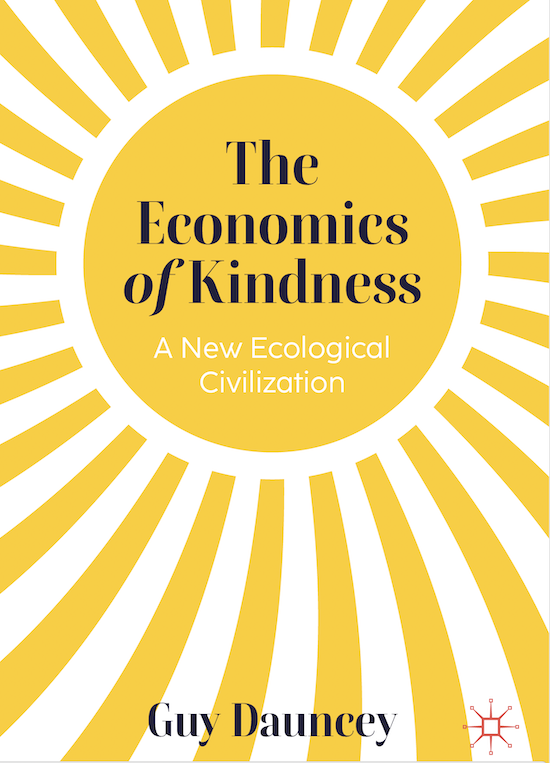
Chapter 1: The Great Mistake
Our world needs more kindness. People need more kindness. Nature needs more kindness. But we need it deep within our economies, where so many of our troubles begin.
We have been told a thousand times that the free-market economy is the best possible kind of economy, but for so many people, and for nature, it’s just not working. Surely, there must be a better way. Our capitalist economy has been built on the primacy of selfishness. What is the alternative? In this book, I hope to convince you that it’s the economics of kindness, which we can use to achieve massive transformative change and build a new ecological civilization. And it’s not just an idea. It’s a very real thing.
But first, we must address the question that’s causing so much anxiety: why are things in such a mess? We’ve got the rising cost of living, the housing crisis, and the ridiculous increase in inequality alongside the tax-avoiding billionaires. We’ve got increasing loneliness. We’ve got refugees, and desperate immigrants. In America, we’ve got oligarchy, kleptocracy, and billionaires who believe they are entitled to rule the world. And all the while, with ominous drumbeats of warning, we’ve got the climate crisis, the collapse of biodiversity, and the reality that we are overshooting Earth’s ecological boundaries. And the horrible ongoing wars. And just when we need calm decisive action, we’ve got social media chaos, increasing anxiety, anger, and hate.
When young Canadians aged 16 to 25 were surveyed in 2022, almost three quarters said they felt frightened about the future. So enough! It is time for change. Time for determined hope. Time for moral ambition, as the Dutch historian Rutger Bregman puts it in his clarion call to action In the pages of this book you will find a solid analysis of how we got into this mess, and a practical guide for not just how we can get out of it, but for how we can build an economy based on cooperation and kindness, as the foundation for a new ecological civilization.
But first, how to make sense of things? A thousand philosophers have offered a thousand answers, but our troubles seem only to get worse. The year 2073 beckons, if you’ve seen Asif Kapadia’s dark movie: democracy obliterated, minorities silenced, dissenters arrested, social media co-opted. The billionaires are having a field day, but billions are struggling, growing angrier and more resentful by the day. Some become extremists who want to tear it all down. A violent coup against democracy that would have been unthinkable ten years ago is now a present possibility in some countries. We need to peel back the myriad symptoms of dysfunction, and discover what’s driving them.
More …. in the book!
Follow Guy’s work on Substack: https://theeconomicsofkindness.substack.com


 By
By